

Texture.
The Many Definitions of Texture
When patients tell us they want smoother skin, they can mean very different things.
Maybe your skin feels rough no matter how much you exfoliate. Your pores seem more noticeable than they used to. Acne has left behind indentations. Fine lines are changing the surface around your eyes or mouth. Or your skin simply doesn't have the smooth, refined quality it once did.
We call all of that “texture.” But figuring out why your skin looks or feels uneven is what determines how we treat it.
WHAT'S ACTUALLY HAPPENING?
Deeper Than What Meets the Eye
Skin texture is influenced by what's happening both at the surface and underneath it.
At the surface, dead skin buildup, dehydration, congestion and changes in cellular turnover can leave skin feeling rough or looking dull.
Deeper within the skin, collagen provides structure and support. Acne, cumulative sun exposure and the natural changes that occur with age can alter that support, contributing to visible pores, fine lines, scarring and an increasingly uneven surface.
That means improving texture can involve anything from exfoliating the outermost layers of skin to stimulating collagen deeper within it.
Same complaint. Very different treatment.
TEXTURE CAN LOOK LIKE A LOT OF THINGS.
The Unseen Spectrum of Surface Irregularities
ROUGH + UNEVEN SKIN
Sometimes texture is exactly what it sounds like: skin that doesn't feel smooth.
Dryness, dead skin buildup, congestion, sun damage and changes in skin renewal can all contribute.
For milder surface texture, we may not need to bring out the biggest device in the building.
ENLARGED-LOOKING PORES
You can't erase pores, and despite what the internet has promised you, they don't actually “open and close.”
But pores can become more noticeable when they're congested, when oil production is higher, or as the surrounding skin loses some of its firmness and support.
The goal is to improve their appearance, not pretend we can make normal anatomy disappear.
PHOTODAMAGE
Years of UV exposure don't only show up as brown spots.
Photodamage can also affect collagen and contribute to roughness, fine lines and an uneven surface.
This is one reason texture and pigmentation frequently show up together.
ACNE SCARRING
Acne scars are changes in the structure of the skin that remain after a breakout has healed.
Depressed acne scars develop when there isn't enough collagen produced during healing, while raised scars can occur when the skin produces excess collagen.
The type, depth and distribution of scarring matter when choosing a treatment.
And if significant active acne is still present, controlling that comes first.
FINE, CREPEY TEXTURE
As collagen, elastin and hydration change, skin can begin to look thinner or finely wrinkled; particularly around the eyes, mouth and other delicate areas.
This isn't necessarily a volume problem.
Sometimes the skin itself is what needs our attention.
HOW WE APPROACH SKIN TEXTURE.
Matching Energy to the Exact Depth
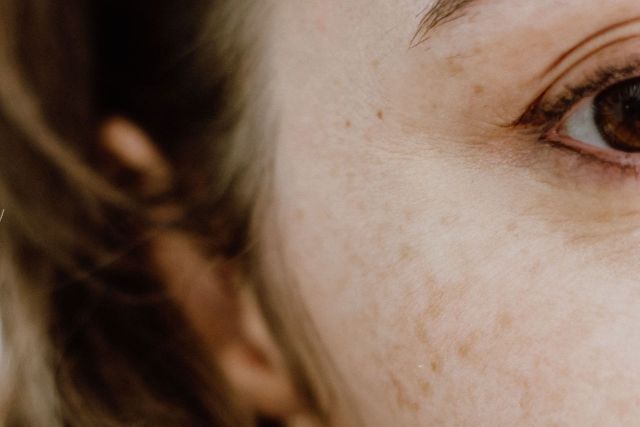
MEDICAL-GRADE SKINCARE
Depending on your skin, we may incorporate ingredients that support cellular turnover, hydration, exfoliation and collagen while making sure your skin barrier can actually tolerate the routine we're giving you.
And yes, daily sunscreen belongs here too. Protecting skin from ongoing UV damage matters when we're investing in improving its quality.
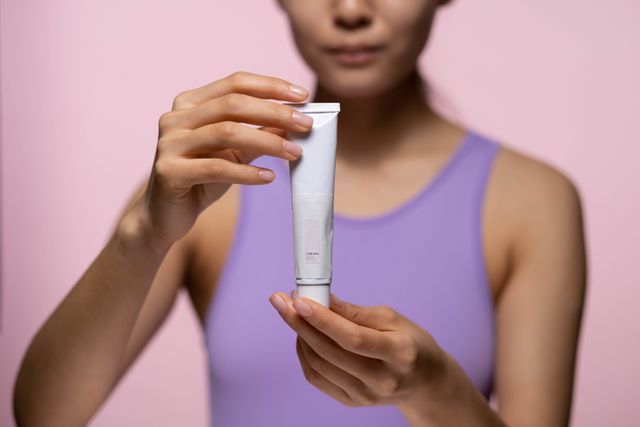
HYDRAFACIAL + PROFESSIONAL FACIALS
When dehydration, buildup or congestion are contributing to uneven texture, a facial treatment may be all we need to start.
These treatments focus more on the surface of the skin and can be incorporated for maintenance or when the concern doesn't require deeper remodelling.
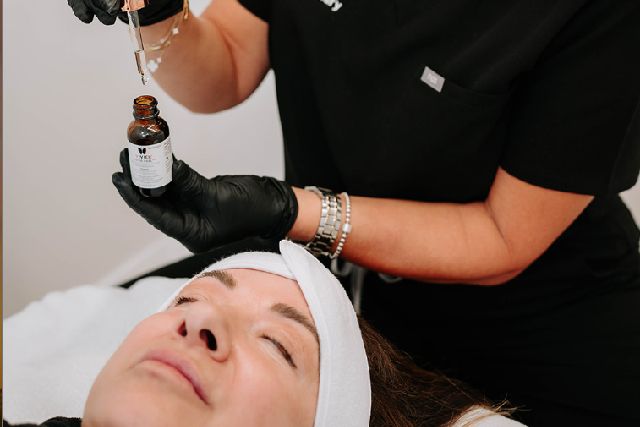
CHEMICAL PEELS
Professional chemical peels create controlled exfoliation at varying depths depending on the formulation used.
They may be incorporated to improve roughness, superficial texture, congestion and overall skin renewal.
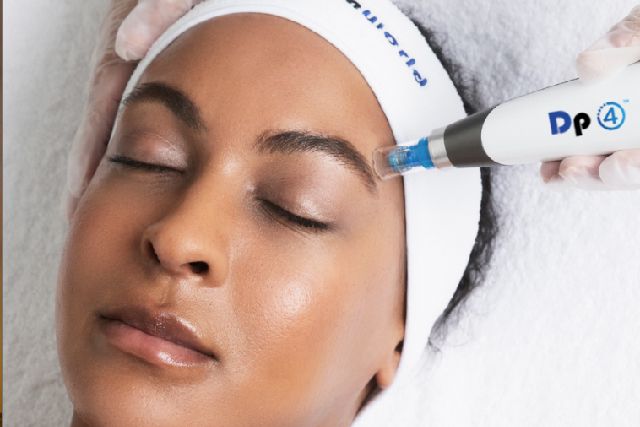
MICRONEEDLING
Microneedling creates controlled micro-injuries that initiate the skin's wound-healing response.
It may be used when the goal is collagen remodelling and improvement in concerns such as certain acne scars and overall skin texture.
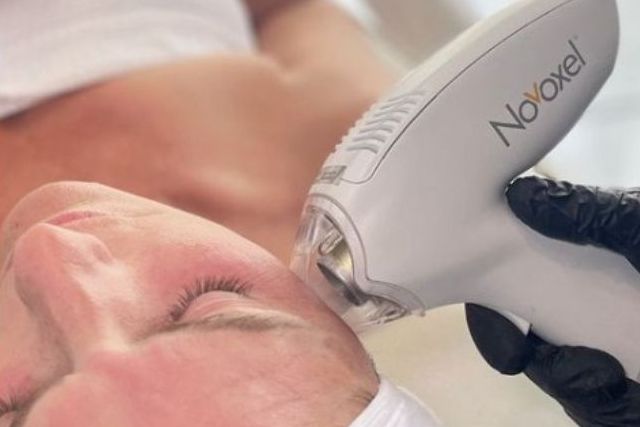
TIXEL
Tixel delivers controlled thermal energy to the skin and can be used when we're targeting fine lines, uneven texture and overall skin quality.
Its ability to treat delicate areas also makes it particularly useful when crepey texture around the eyes is part of the concern.
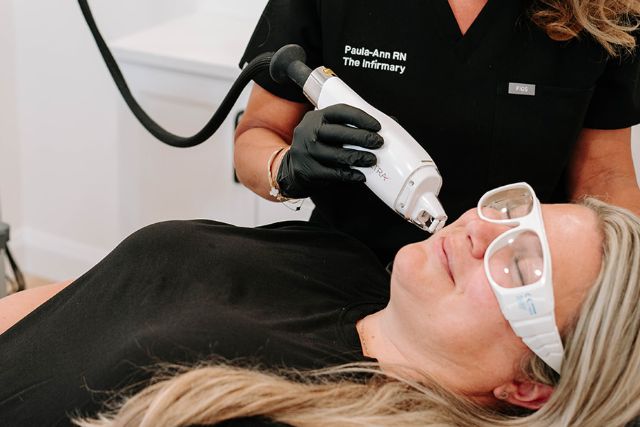
LASEMD ULTRA
LaseMD Ultra uses a 1927 nm thulium laser to create microscopic treatment zones within the skin.
It may be incorporated when texture exists alongside concerns such as pigmentation, sun damage and uneven tone — allowing us to work on several aspects of skin quality within the same plan.
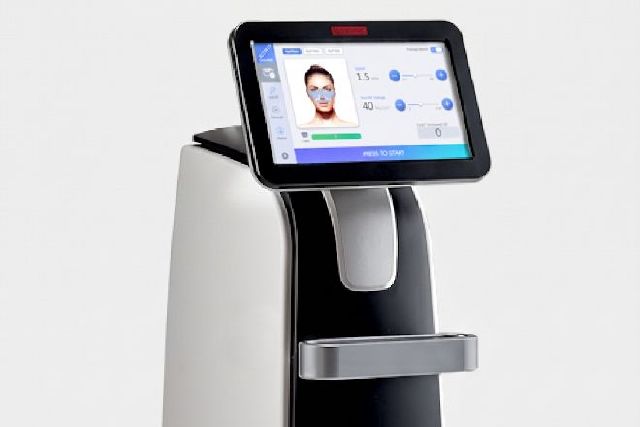
GENIUS RF MICRONEEDLING
When we want to work deeper, Genius combines microneedling with radiofrequency energy delivered below the skin's surface.
It may be incorporated for more established textural concerns, acne scarring and changes in firmness where deeper collagen remodelling is part of the goal.
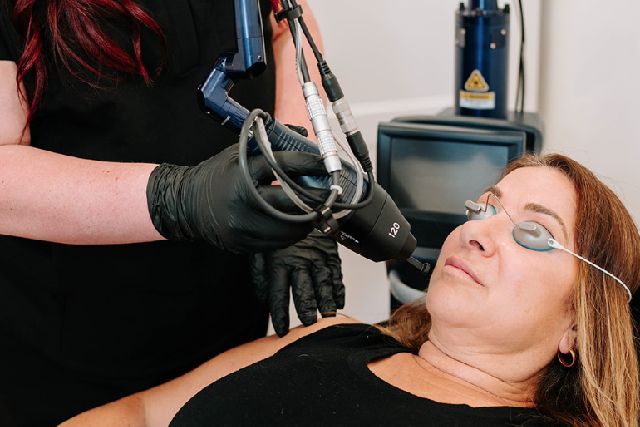
eCO2 LASER RESURFACING
For more significant texture, deeper lines or acne scarring, fractional CO2 resurfacing allows us to take a more intensive approach.
eCO2 creates controlled microscopic treatment columns that trigger a healing and remodelling response in the skin.
NOT EVERYTHING NEEDS TO BE RESURFACED.
Precision Over Force
This is where assessment matters.
If your “texture” is primarily dehydration and buildup, aggressive resurfacing doesn't make sense.
If you're dealing with established acne scarring, a facial isn't going to remodel a scar that extends deeper into the skin.
And if you're seeing pores, we're not going to promise to make normal skin anatomy disappear.